

The Marylebone Aesthetics Market
Marylebone is the private medical quarter of central London. Harley Street runs through it, and the streets around it, Wimpole Street, Devonshire Place, Weymouth Street, Queen Anne Street and Portland Place, hold one of the densest concentrations of private consulting rooms anywhere in Europe. For an aesthetic clinic, that address does two things at once. It buys immediate credibility with a patient who is being careful, and it removes credibility as a point of difference, because every competitor within a five minute walk has exactly the same one.
Search behaves differently here than it does in a city market. Patients and clinic owners in central London rarely search at city level. They search by district and by street, which is why phrases built around Marylebone, Harley Street, Mayfair and Knightsbridge exist as their own distinct demand rather than as variations of a London query. We see that pattern directly in our own search data, and it is the reason this page exists: the district level demand was reaching us with no page of ours to land on.
We publish no clinic counts, market size estimates, average treatment values or growth percentages for Marylebone. Figures like those circulate widely in aesthetics marketing and very few of them can be traced back to a source that still holds up. What follows instead is structural. How search behaves inside W1, where the competitive pressure genuinely sits, what the advertising rules allow you to say, and which of those things a clinic can actually control.
Why Marylebone for Aesthetic Clinics
In most local markets, the location is the differentiator. In Marylebone it is the entry ticket. A patient comparing three practices on Harley Street is not choosing between addresses, they are choosing between practitioners, so the entity that has to be built in search is the person, not just the practice. That means a named practitioner with a real profile page, registration details that can be checked, a consistent professional history across every platform that mentions them, and content that carries their name rather than a house byline. Search engines and answer engines both resolve this market to people, and a clinic that publishes only under its brand is competing with one hand behind its back.
The second thing that makes W1 unusual is the address model. A large share of consulting rooms in the medical quarter are let by the session or the day, so a single street number can hold dozens of unrelated practices. That creates specific and very practical problems: business listings that collide at the same address, inconsistent name, address and phone details across directories, suite numbers that appear three different ways, and a local listing that struggles to hold its position because the premises are not staffed in the way a local listing is expected to be. This is the single most common technical reason a good Marylebone practice is invisible in the map results, and it is fixable, but only if it is diagnosed as an address problem rather than treated as an SEO problem.
Third, the consideration period at this end of the market is long. A patient researching a regenerative treatment or a corrective procedure in Marylebone reads for weeks, gathers second opinions, and arrives at a consultation already informed. Advertising does not carry that journey. Answers do. That happens to align neatly with the advertising rules this sector works under, because content that explains, qualifies and sets expectations is both what the patient wants and what compliance allows, while content that promotes tends to fail on both counts at once.
Botulinum toxin is a prescription only medicine in the UK, which means it cannot be advertised to the public at all. That one rule shapes what a Marylebone clinic may put on a page, in an advert, in a social post and in a Google Business Profile update, and it catches out a great deal of otherwise well written copy. We write for the questions patients actually ask, and we keep prescription only medicines out of promotional context, so that pages rank without creating a compliance problem for the practice.
How Marylebone Patients Actually Search
Practitioner name searches
The most valuable queries in W1 are a person's name, often after a recommendation or a first consultation elsewhere. If the practitioner has no authoritative page of their own, that search lands on a directory or a review site instead of the clinic.
Street level searches
Queries built on Harley Street and Marylebone behave like local pack queries, which makes the Business Profile and the address data more decisive than the website. Most practices here have invested in the site and neglected the listing.
Second opinion and comparison
Patients at this end of the market compare practitioners, techniques and aftercare before they compare prices. Comparison and expectation setting content earns the visit, and it is the format answer engines quote from most readily.
Regenerative and skin quality
Polynucleotides, skin boosters and biostimulators can be discussed by name in a way that a prescription only medicine cannot. That makes them the most productive ground for content that ranks without creating an advertising problem.
Area-by-Area Opportunity Map
Not all areas of Marylebone are equal. Here is where the real SEO opportunities lie, and where competition is fiercest.
Harley Street
HighThe name the whole quarter is known by, and the phrase patients search by street rather than by district. Competition is not really for the term itself, it is for being the practice a patient trusts once they have found five that share the address.
Wimpole Street & Devonshire Place
HighThe quieter half of the medical quarter, heavily consultant led, with a large share of specialist and referral practice alongside aesthetics.
Portland Place & Great Portland Street
MediumThe eastern edge, where the medical quarter meets Fitzrovia and the BBC. A mix of established institutions and newer clinic groups taking space.
Marylebone High Street & the Village
MediumThe retail and lifestyle heart of the district. Skin, wellness and maintenance treatments sit naturally here, with a strong local residential catchment rather than a referral one.
Baker Street & Gloucester Place
MediumStrong footfall and a commuter catchment, with a broader price range than the medical quarter immediately to the east.
Cavendish Square & Wigmore Street
HighThe southern edge, minutes from Oxford Street, serving both the working population and patients arriving from further afield.
Competitor Landscape
The competitive picture in Marylebone stratifies by reputation rather than by price. At the top sit long established consultant led practices whose principal has a personal brand built over decades, often supported by teaching, publication or media work, and those signals are visible to search engines as well as to patients. Below that is a large and growing group of multi practitioner clinics and serviced consulting rooms, where the practice is strong but the digital identity is diluted across a shared address and a rotating list of practitioners. Then there are national and international groups holding a W1 outpost mainly for the address, usually marketed from a head office site that treats Marylebone as one location page among many. Finally, directories, aggregators and review platforms occupy a disproportionate share of the first page for unbranded district queries, which is where an independent practice most often loses.
District and street level demand exists as its own distinct search behaviour and is poorly served by the London pages that currently absorb it. A practice that builds practitioner authority and corrects its address layer can hold this ground against far larger competitors, because neither advantage can be bought with budget alone.
SEO Strategy for Marylebone
Build the practitioner as an entity, not just the clinic. A named profile page with credentials, registration, areas of practice, publications and a consistent presence across every platform that references them, linked with Person and Organization schema so the relationship is explicit.
Fix the address layer before touching content. Consistent name, address and phone details everywhere, one canonical form of the suite or floor, and a Business Profile configured correctly for a shared premises rather than left in whatever state it was verified in.
Write to the district and the street, not to London. Pages and sections that answer Marylebone and Harley Street questions specifically, because that is the granularity at which this market searches and at which the competition is thinnest.
Treat compliance as a content strategy rather than a constraint. Explaining a treatment category, its evidence, its limits and its aftercare outranks promotional copy and stays inside the advertising rules, which is why it is the format we build around.
Structure everything to be quotable. Direct answers under question shaped headings, defined terms, comparison tables and a real FAQ block, so ChatGPT, Perplexity and AI Overviews can lift a passage and cite the practice by name.
Your Marylebone SEO Timeline
Address, listing and citation audit across the shared premises
Technical foundation and schema, including Person and Organization
Practitioner authority pages live and internally linked
District and street level content answering real patient questions
Visibility for Marylebone and Harley Street queries
Cited by answer engines for the practice and the practitioner
Clinics We Actually Work With
We publish the work rather than quotes. Each clinic below is a live client, and its case study sets out what we built and what it was for.
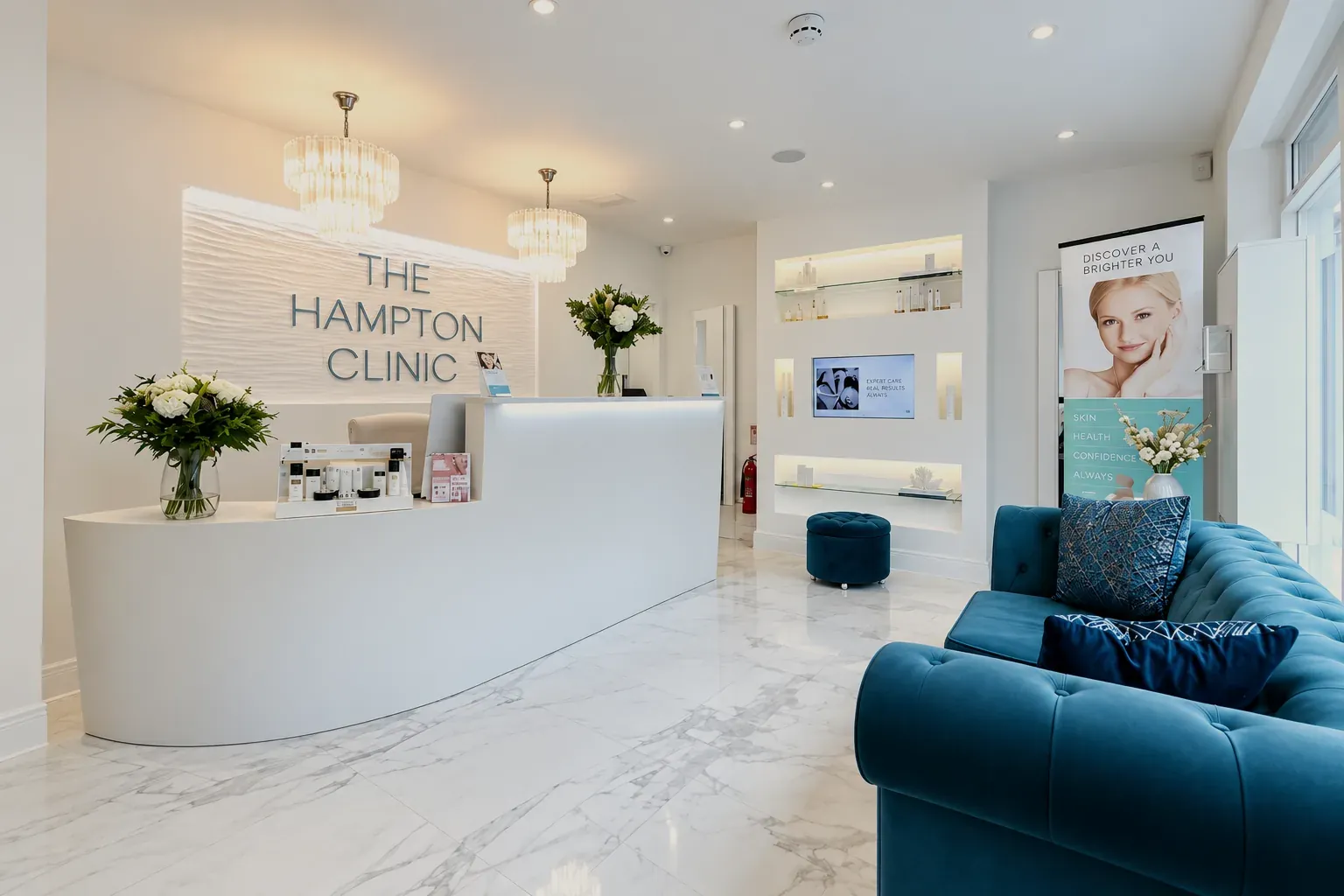
The Hampton Clinic
Positioning, rebrand, new website and SEO from scratch
Whiteladies Road, Bristol
Read the case study →
Aesthetic Doctors Australia
Rebrand, website, SEO and AI search programme
Kew, Melbourne
Read the case study →
Dr. Harry Clinic
Branding, website design and SEO strategy
Chiswick and Covent Garden, London
Read the case study →
Mesglo London
Full rebrand, website and two-year growth plan
Marylebone, Central London
Read the case study →
Luxe Skin by Dr Q
Rebrand, website launch and ecosystem strategy
Glasgow, Scotland
Read the case study →
Facial Sculpting
SEO, AI search, content, design and email as one system
South Kensington, London
Read the case study →Our Marylebone Services
Clinic Launch Package
A complete digital foundation for new Marylebone clinic openings. Website, local SEO, Google Business Profile optimisation, and content, built to rank in the London market.
Learn MoreSEO Growth Retainer
Ongoing SEO for established Marylebone clinics. Keyword strategy, content creation, technical optimisation, and local authority building, designed for the very high competition environment.
Learn MoreWebsite Design
Conversion-optimised clinic websites designed for Marylebone patients. Mobile-first, fast-loading, and built with local search intent in mind.
Learn MoreDigital Marketing
Full-spectrum digital marketing for Marylebone clinics: Google Ads, social media, email automation, and reputation management. Every channel, one expert team.
Learn MoreClinic SEO starts at £750 a month. SEO and AI search together, with your website looked after, start at £797 a month.
Aesthetic Clinic Marketing in Marylebone, Answered
Do I need a separate marketing strategy for Marylebone, or is London enough?+
Marylebone needs its own approach, because central London patients search by district and by street rather than by city. A page written for London competes against national chains and directories on generic terms, while a page written for Marylebone and Harley Street competes for the searches your actual catchment is running. The two are complementary, and the district level work is usually the faster of the two to show movement.
My clinic shares a Harley Street address with other practices. Can it still rank locally?+
Yes, but the address layer has to be corrected first. Shared consulting rooms create colliding listings, inconsistent suite formats and Business Profiles that were verified in a state they should not have stayed in, and no amount of content fixes that. We audit the listing, the citations and the name, address and phone consistency across every directory before we touch the website, because in W1 that is usually where the ranking is lost.
Can I advertise Botox on my clinic website?+
No. Botulinum toxin is a prescription only medicine in the UK and prescription only medicines cannot be advertised to the public, which applies to your website, your adverts, your social posts and your Business Profile updates. Clinics can publish educational and informational content about treatment categories, and can discuss treatments that are not prescription only medicines by name. We build content plans around what the rules allow rather than writing copy that has to be taken down later.
How long does it take to see results for a Marylebone clinic?+
Expect the address and listing work to show first, often within the first two or three months, because it corrects a mechanical problem rather than competing for authority. Content and practitioner authority build more slowly, typically over six to twelve months, and depend on your existing domain strength and how established the competing practitioners are. We report monthly against the district level queries specifically, so progress is visible rather than inferred.
What does aesthetic clinic marketing in Marylebone cost?+
Retainers start from £750 per month for a focused single location campaign. A programme covering technical work, the address and listing layer, practitioner authority pages and ongoing content typically ranges from £1,200 to £2,500 per month. We scope to the stage the practice is at, because a practitioner opening a room in W1G needs something quite different from an established practice defending a position it already holds.
Let's Build Your Marylebone Digital Presence
Whether you're opening a new clinic or scaling an existing practice in Marylebone, we'll build the digital infrastructure to dominate your local market.